
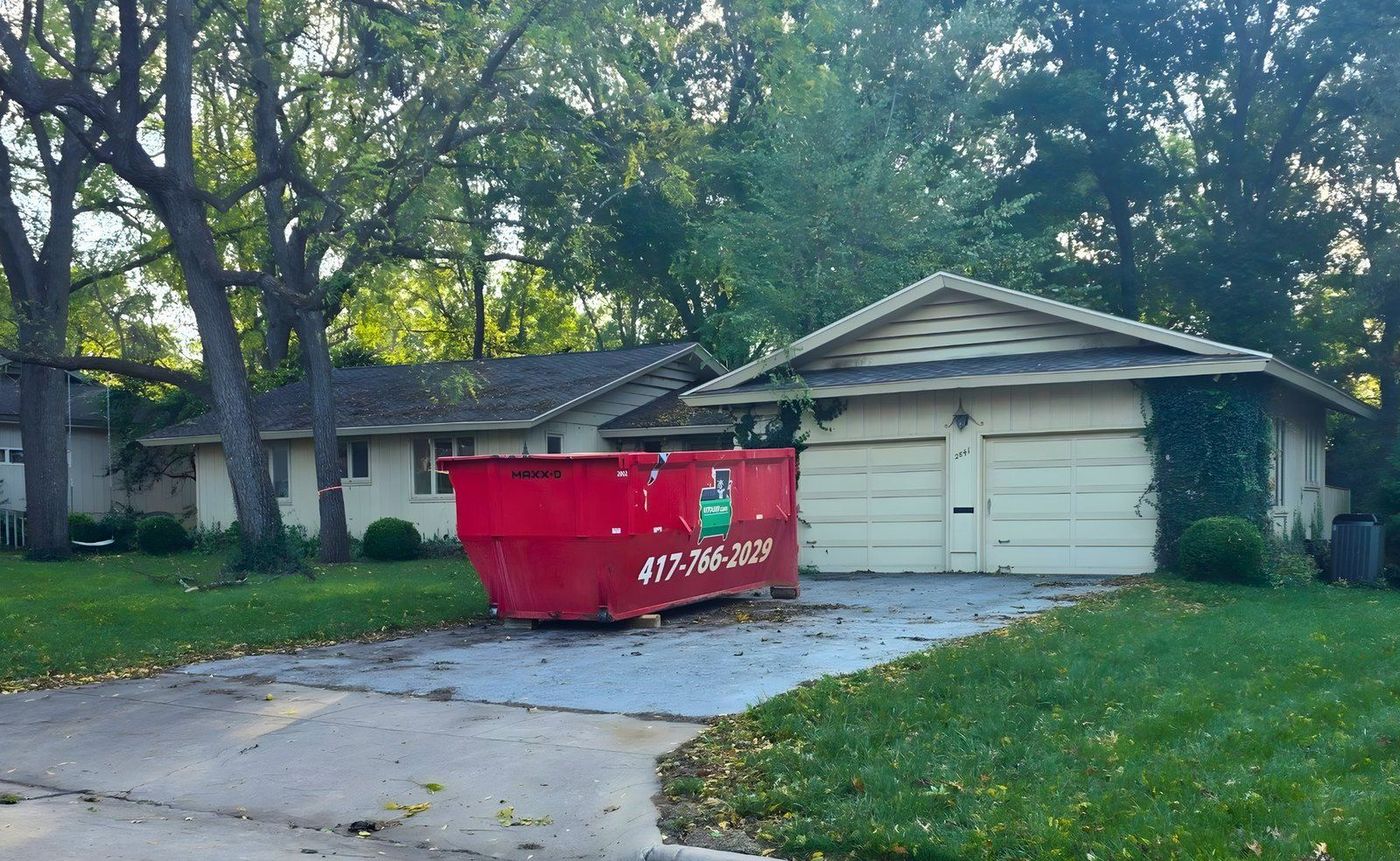
Usually not, and the way we deliver is most of the reason. Our dumpsters ride out on a trailer behind a pickup with a hydraulic lift, so the dumpster gets set down where you want it. A cable roll-off truck drags it off a tilted bed instead. The dragging is what chews up a driveway, and we do not do that.
That said, it depends on your surface and on what is going in the dumpster, and it is a two-minute conversation worth having when you call.
Plain poured concrete in decent shape handles a loaded dumpster without complaint. So does asphalt in cool weather. Gravel is completely normal for us and the dumpster sits on it fine. The surfaces worth flagging are stamped or decorative concrete, anything freshly poured, pavers, and asphalt in the middle of a July heat wave. In that heat it goes soft enough to take an impression from anything heavy sitting on it for three days.
For any of those, ask about boards when you book. We put boards under the wheels on request, and they go under the dumpster as standard on grass and gravel anyway. They spread the load across a wider area and they are the difference between a mark and no mark on a surface you care about. It costs you nothing but remembering to mention it.
What is in the dumpster matters as much as the dumpster. A 14-yard full of broken concrete is a different weight sitting on your driveway than a 20-yard full of old furniture and cardboard, even though the second one looks bigger. If your load is going to be heavy, and concrete, dirt and shingles all count, that is worth saying on the call so we can talk about placement rather than just size.
Where the dumpster goes is the other half. The trailer needs a straight run to back in, so a driveway with a tight turn at the bottom or a parked car halfway up is worth describing on the phone.
Look up before you pick a spot: low limbs and service wires are the usual reason a drop point has to move. Finding that out with the truck in the street is worse than finding it out on the phone. If your only good spot is soft ground or fresh fill, say so.
If the only place the dumpster can sit is the street rather than your own property, that becomes a city question rather than ours. On your own driveway you do not need paperwork. In the public right of way you may, and the rules vary by town, so check with the city first. There is more on that on the permit guide.
Renters and property managers ask a version of this question too, usually about a driveway they do not own. Same answer, with one addition: get the owner's agreement on the placement before delivery rather than after, because moving a loaded dumpster is not a thing that happens.
Time on the surface matters as much as weight, which is the part people do not expect. A heavy dumpster sitting on soft asphalt for three days in August has longer to settle into it than the same dumpster sitting there for one. If your surface is marginal and the job is short, say so. Pulling the dumpster the day you finish rather than on day three is free, and it is sometimes the whole answer.
If you are not sure whether your driveway has the room or the surface for it, call (417) 766-2029 and describe it. Tight spot, steep grade, low branches, new concrete, whatever it is. We would rather sort it out on the phone than send a truck that cannot make the drop.