
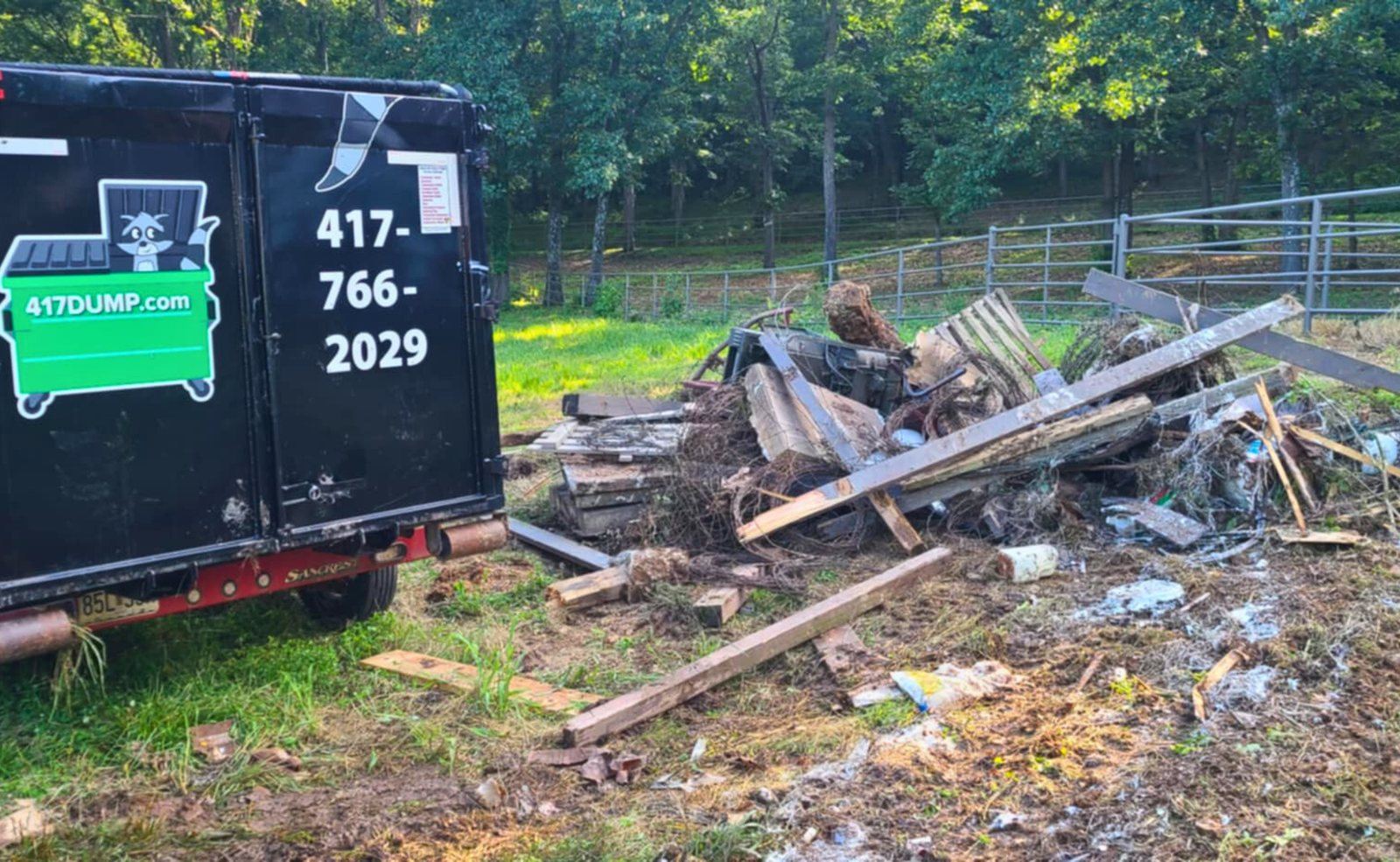
A garage cleanout goes in the 20-yard. The load is bulky and mostly light, which is the opposite of a roofing job, and a garage runs out of room in the dumpster long before it runs out of weight.
The garage is almost always the biggest room in a cleanout, and it is not close. It is where everything the house did not want ended up. Metal shelving that came with the place. Scrap lumber from a project that finished in 2014. Bikes nobody outgrew gracefully. Three kinds of hose. A workbench nobody has seen the top of since the kids were small. None of that is heavy, but all of it is awkward, and a pickup bed holds a fraction of what a person imagines it does.
The ten-trips version of this job is real, and it is what the dumpster is for. A round trip to a transfer station with a loaded truck is most of an hour once you count the loading, the drive, the queue, the unloading and the drive back. Do that eight times over a weekend and the cleanout has eaten the weekend. A dumpster sitting in the driveway takes all of it in one pass, on your schedule, and leaves when you are done.
Sorting before the dumpster lands is what makes the difference between one dumpster and two. Pull out anything going to a donation run first, because once a thing is in the dumpster it is gone. People are consistently surprised by what they change their mind about at the last minute. Set aside anything with fuel in it. Mowers, trimmers, cans of gas, half-full jugs of chemicals: none of that can ride, and finding it at the bottom of a full dumpster is a problem you do not want.
The list of what cannot go in is short and it is worth knowing before you start rather than after. No liquids of any kind. No household garbage or food waste. Nothing hazardous, which means chemicals, fuel, batteries, tires, asbestos, or anything still holding refrigerant.
That last one catches old garage fridges and chest freezers, which need the refrigerant pulled by somebody licensed to do it before the shell can go in the dumpster. The full list of what goes in is on the site, and if something is not on it, call and ask rather than guessing.
Loading well buys you more dumpster than you think you have. Flat things go flat, along the floor. Break down the dumpsters rather than throwing them in shaped. Put the long awkward pieces in first and fill around them. Doing it the other way leaves you standing on a mountain of small stuff, trying to wedge a ladder in on top.
Load level with the top rail and stop there. A load mounded over the rail cannot be tarped or hauled legally, so anything sticking up has to come back out before the dumpster can leave.
On placement, the dumpster wants to be as close to the garage door as the driveway allows. We deliver on a trailer behind a pickup with a hydraulic lift, so a tighter driveway is usually workable, and a gravel drive is a normal drop rather than a problem.
Leave a straight run for the trailer to back in and check for low limbs where the dumpster will sit. If the spot is tight, describe it on the phone and we will tell you whether the truck can make it before the day.
The 20-yard starts at $299 with a three-day rental, and extra days are $20 apiece. Three days covers a normal garage over a weekend with room to spare. If the garage has decades of living in it and you suspect it is a two-dumpster job, say so when you call. It is cheaper to plan for that up front than to find out on day two.
Call (417) 766-2029 and describe what is in there, and Kyle will tell you whether one dumpster does it.