
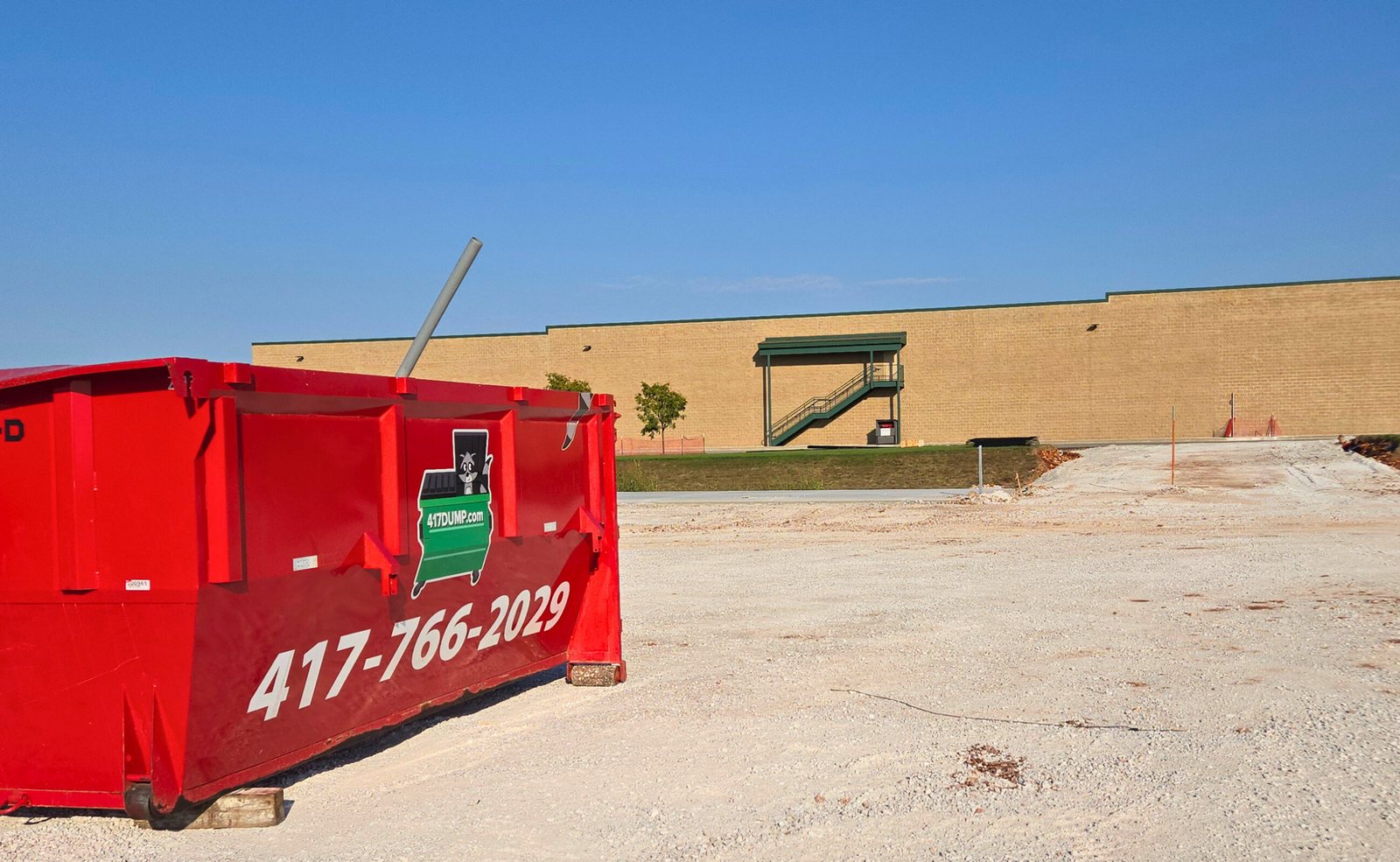
Concrete, dirt, brick and rock all go in our dumpsters, and they all go in the 14-yard. The short version is that dense material hits the truck's legal road weight while the dumpster still looks half empty, so the smaller dumpster is not a downgrade on these jobs. It is the correct tool.
This is the thing that catches people who have rented a dumpster before for a different kind of job. On a cleanout you are buying volume, and the question is whether everything fits. On a concrete job you are buying weight, and the dumpster stops being loadable at a point that looks wrong. A patio tear-out that fills a third of a 14-yard can be a finished load. That is not us being cautious. A truck over its legal axle weight does not leave the driveway.
Broken concrete is the most common version of this around here: an old patio, a cracked sidewalk section, front steps that finally went, a slab from a shed that is coming out. Dirt and sod are the other one, usually from a landscaping job or a footing dig. Brick and rock behave the same way. All of it is accepted, none of it is a problem, and all of it wants the same conversation on the phone before the dumpster arrives.
Mixing is where it gets expensive. A load of clean concrete and a load of concrete with a couple of bags of household trash and some scrap lumber thrown in are two different loads at the scale house. The second one costs more to dispose of.
If you have both kinds of debris coming out of one job, and a lot of jobs produce both, it is worth telling us on the call. That way we can work out whether that is one dumpster or two. Two smaller loads handled deliberately usually beats one mixed load handled by accident.
The other thing dense material does is sit still. Concrete does not settle or shift the way a cleanout load does, so what you stack is what you get. Lay the flat pieces flat and fill the gaps with the smaller rubble rather than tipping everything in as it comes. It sounds fussy and it is worth about a third of the dumpster.
Placement gets more attention on a heavy job than a light one. A loaded concrete dumpster is a serious weight sitting on whatever it is sitting on, and that matters if the surface is fresh, soft, or decorative. Stamped or coloured concrete, a new pour, a paver drive, or soft fill after rain are all worth mentioning before the day rather than after.
Boards under the wheels are available on request and they go under the dumpster as standard on grass and gravel anyway. Our dumpsters come in on a trailer behind a pickup with a hydraulic lift, which sets the dumpster down rather than dragging it off a tilted bed. That is easier on a driveway than the cable-truck alternative.
Weight is billed after pickup, once the load has actually crossed a scale, and on a concrete job that is the number worth understanding before you book rather than after. Kyle goes over exactly how it works on the phone, and nothing about it turns up later as a surprise. The starting price for the 14-yard is $249 with a three-day rental period, extra days at $20 each, and the rest of the breakdown is on the pricing page.
One thing that is not a dumpster job: anything with asbestos in it. Older houses around Springfield can have it in floor tile, mastic, pipe wrap and some siding. That is a licensed abatement job under state and federal rules, and it does not go in a roll-off at any size.
Call (417) 766-2029, tell us roughly how much concrete or dirt is coming out and what else is going in with it, and we will size it properly.